Release date: January 2027
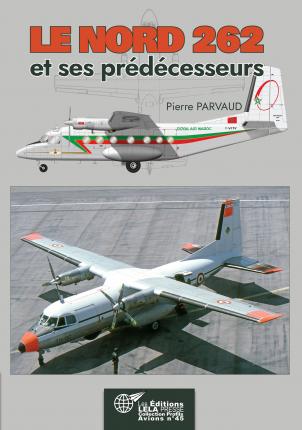
Nord-Aviation was established in January 1958 through the renaming of the Société Nationale des Constructions Aéronautiques du Nord (SNCAN). Its design office was based in Châtillon (Seine), with manufacturing plants located at the airports of Bourges (Cher) and Méaulte (Somme). After producing the Nord 2501 Noratlas until February 1962, as well as various missiles, the French state entrusted the company with the development of the Max-Holste Super Broussard. This aircraft became the Nord 262—a pressurized turboprop intended primarily for the civil market, a domain in which Nord-Aviation lacked experience. The target market was US local service airlines, which needed to replace nearly 200 DC-3s; 18 of these carriers placed 74 options, as the N-262 appeared ideally suited to their operational requirements. Securing firm foreign orders required a French launch customer. Air Inter was coerced into this role by the government, despite preferring faster and more cost-effective alternatives such as the Potez 840 or the Dassault Communauté A-1. The airline demanded a capital increase and a state loan before finally agreeing to order four N-262s on June 19, 1964. This initial French commitment unlocked an order from US carrier Lake Central Airlines for eight aircraft plus 14 options on June 29, 1964. Lake Central ordered four additional units in April 1966. However, following a series of Bastan turbine incidents—caused as much by teething design issues as by non-compliance with operating and maintenance procedures, unsuitable flight profiles, and after-sales support shortcomings—Lake Central cancelled its remaining ten options and terminated its US sales agency agreement for the N-262. This triggered the cancellation of the 62 options held by other American regional carriers. This failed entry into the US market created widespread skepticism among airlines, forcing the French state to absorb 55 of the 110 unsold production aircraft for the French Navy, the French Air Force, the Flight Test Centre (CEV), and the Aeronautical Training Service (SFA). Furthermore, production suffered a four-year hiatus at airframe No. 99 in late 1972, which was only resumed in early 1977 to complete airframes 100 through 110. While the factory-new N-262 found only 27 customers, subsequent reliability improvements enabled it to secure 67 second-hand operators. Following several unsuccessful revival attempts, the Franco-Italian twin-turboprop ATR-42 finally took over the segment in 1981.
Featuring over 770 photographs, 20 color profiles, insignia, and technical drawings across 512 pages.