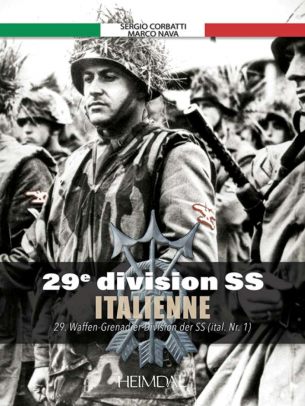
The formation of the Italian SS division—specifically designated as the 29th Waffen Grenadier Division of the SS—occurred within the chaotic context of the final stages of World War II in Italy. It began on September 8, 1943, when the Kingdom of Italy signed an armistice with the Allies. This led to a German occupation and the subsequent establishment of the Italian Social Republic (RSI) under Mussolini, effectively splitting the country in two.
To address the mass desertion of Italian soldiers—leaving nearly 600,000 men disarmed—the Germans devised a recruitment program, which Mussolini approved on October 2, 1943. Recruits were drawn primarily from former Fascist "Blackshirts," repentant deserters, and other pro-Axis militants.
On October 18, 1943, the "Italian SS Legion" was officially established in Münsingen, Germany. On November 23, 1943, thirteen battalions of Italian militia members took an oath of allegiance and were subsequently transferred to an SS training school in Italy. The legion initially numbered approximately 15,000 men. Renamed the "1st Italian Volunteer Assault Brigade" in March 1944, the unit was deployed to the Anzio-Nettuno front in April, and later to the area near Rome. The unit fought fiercely against the Allies, notably repelling attacks by the U.S. 3rd Infantry Division. Their bravery impressed Heinrich Himmler himself; on May 3, 1944, he granted the Italians permission to wear the SS runes on a black background—replacing the insignia previously worn on a red background—thereby signifying their full integration into the Waffen-SS. On September 7, 1944, the brigade became the *Waffen-Grenadier-Brigade der SS*. It operated in Northern Italy, fighting against partisans and attempting to counter the Allied advance. In February 1945, as the front collapsed, it was elevated to the status of a division. In the spring of 1945, it engaged French units in Lombardy and partisans in Piedmont, but suffered heavy losses due to a lack of equipment and desertion. On April 30, 1945, its remaining elements surrendered to American troops in Gorgonzola, Lombardy.
This unit illustrates the desperate collaboration of a segment of the Italian population with the Third Reich, set against the backdrop of a bloody Italian civil war. It symbolizes the ideological divide within Italy; in the postwar period, some veterans would even become involved in clandestine anti-communist networks during the dark era known as the "strategy of tension."